

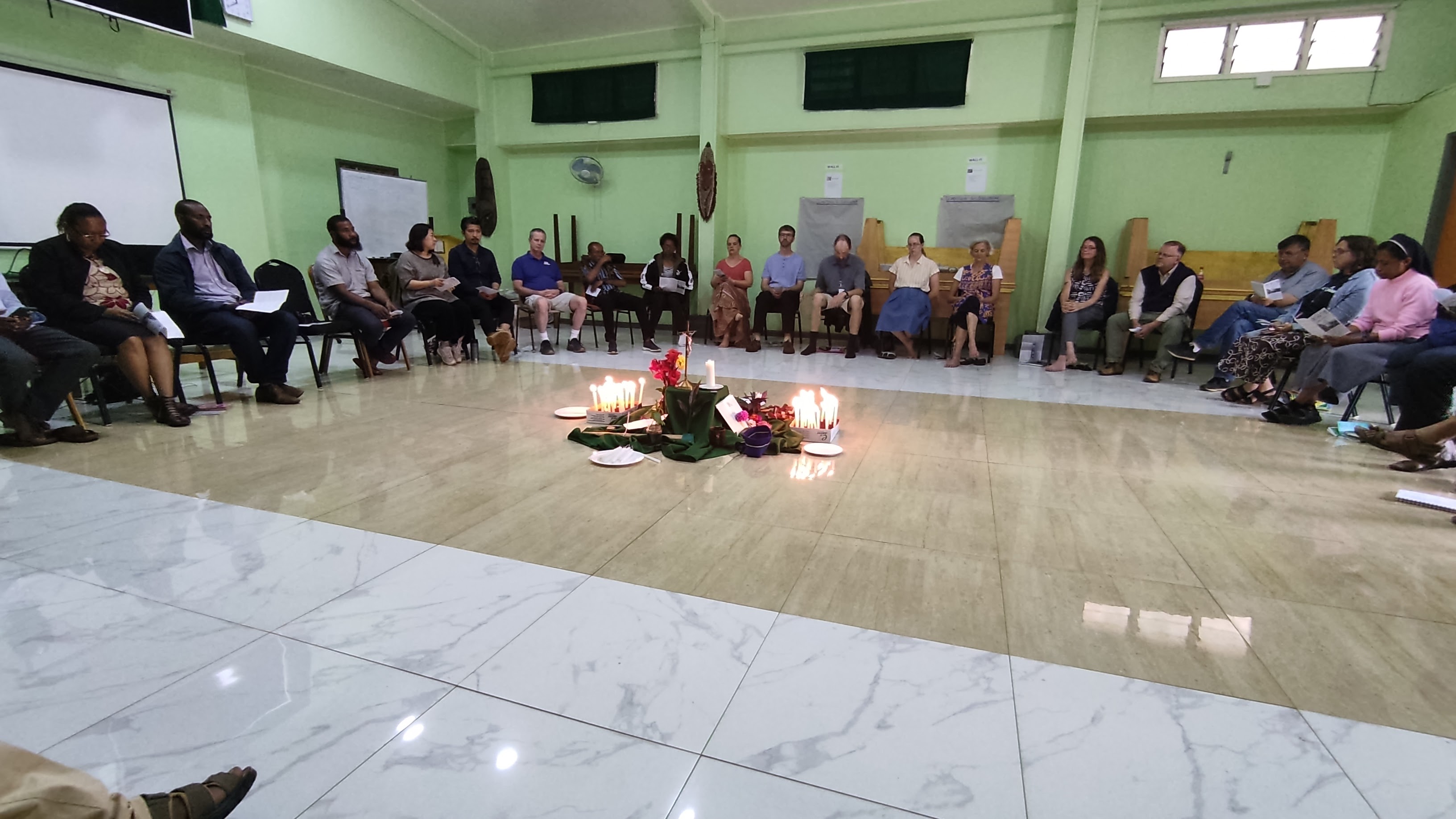
Before we even had time to settle into our new home, our orientation started with a two-week stay at the Melanesian Institute (MI) in Goroka, the “big city” capital of the Eastern Highlands Province (the province Ukarumpa is in).

MI is an anthropological research and teaching institution which for over 50 years (which means it started pre-independence) has focused on helping missionaries better understand Melanesian culture (with a special emphasis on Papua New Guinea) so that they can better serve Melanesian people. The teachers and researchers at MI are not only doing good scholarly research, but also all but one of them are Melanesian, which means before their research they had already started with a better understanding than we will ever reach as outsiders. In addition, their anthropology is very much concerned with application; the goal is not just to publish papers, but to figure out better ways to serve the people being studied.
During our two weeks, we attended a series of seminars that attempted to provide a kind of generalized ethnography (description of a people group) of Melanesians in general. Melanesia is a term that covers multiple countries (Papua New Guinea, Solomon Islands, Vanuatu, Fiji, and part of Indonesia), each of which is made up of at least several different language groups (over 1,300 total at last count), so there is not one “Melanesian” culture, but through their research, MI has been able to determine several cultural tendencies which are common throughout Melanesia. On top of that, since the staff come from all over Papua New Guinea, each had their own perspective and were able to speak to the culture of the specific area from which they came.
We started with a discussion of the history of the region, including pre-history. Linguistic evidence suggests many of the people who now live in Melanesia are descended from a people group (Austronesians) who originally came from what is now Taiwan and eventually settled in Melanesia. We also discussed the impact of colonialism on Melanesia, including how it is still affecting the region today. We dug into traditional Melanesian worldviews, religion, ethics, and values and discussed how they have changed through exposure to Christianity. We talked about more specific values and artifacts of those values, such as family life, kinship identities, land rights and identity, social organization, law and justice, aging and death practices, education, and social mobility. We discussed movements and ministries being done today in PNG and other current issues, such as sorcery accusation, environmental impacts, and the split between Papua New Guinea and the Autonomous Region of Bougainville, that the Church is or should be addressing.
We learned so much at MI that we consider invaluable to our current and future ministry in PNG. Our time there was not all easy or fun; sleeping was difficult, with heat and noise (mostly dogs barking/fighting) keeping us up a lot at night. Kelly was also ill for some of the time, so she missed out on some of the sessions. But we are so glad that we started our ministry in PNG with this important learning experience.
 Knick News